DEEP DIVE: Editor's Autopsy #001

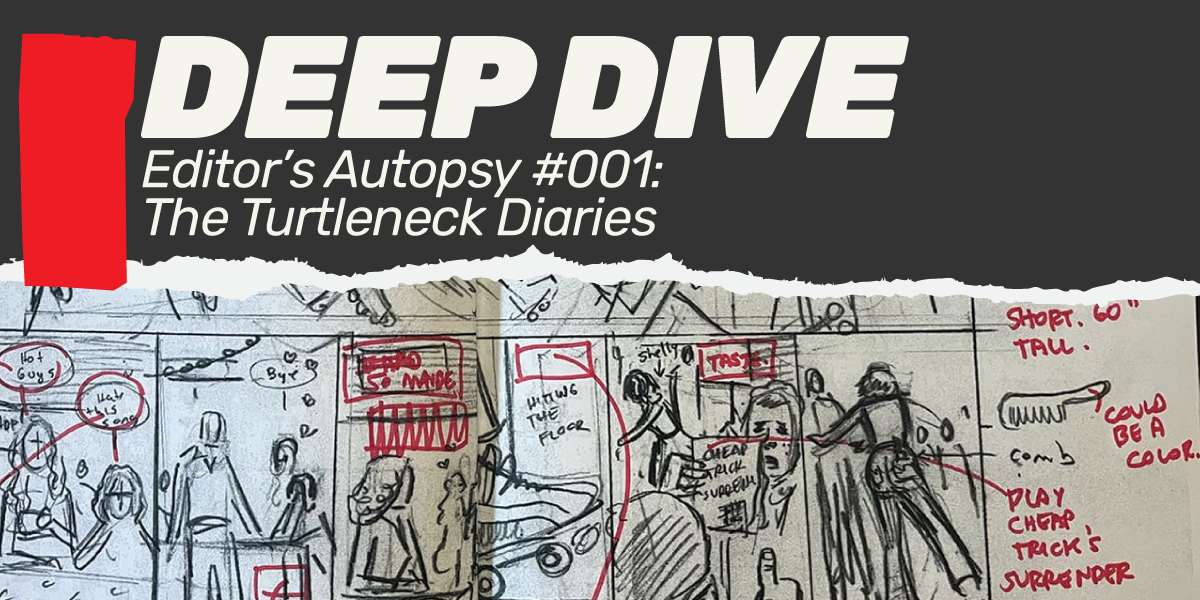
The following is what to expect from the Standard subscription to F&G. Each Tuesday this month, we’ll add to the DEEP DIVE with more stages.
The Turtleneck Diaries part 1
When it comes to fashion, you can’t go wrong with a turtleneck. I’ve always been a fan--whether it’s the tight, black mod ‘60s kind that hits below the waist and goes with a color-block miniskirt, or the preppy repeat patterns of the ‘late 70s. Or my personal preference: the striped, high contrast layer that was part of my signature style when I lived in NYC and edited comics at Vertigo.
Where were you in 1979?
Before New York though, I grew up in the suburbs and went to school with kids who were nothing like me. But that didn’t matter. I was raised to have hobbies, and it was roller skating on Friday Nights that kept me sane. Unlike other girls my age, who were stealing their mom’s lipstick or sneaking out to smoke cigarettes, I wanted to be a kid for as long as possible, despite the odds. So what better place to start a series of autobio comics than revealing the incidents surrounding my first legit kiss?
On to Comics Editing
In my experience, the best way to explain comics editing is to lead by example and ask questions later (see you on Saturday at the AMA?!). One of the key components is to grab someone by the collar, and drag them off the high dive with you.
When Stray Bullets legend DAVID LAPHAM was waiting for a script (twirling his hair), I seized the moment to ask him to illustrate Skate The Night Away for The Turtleneck Diaries. The caveat was that he would be okay with me using his art as a teaching tool. We'd walk through the pages on a short video clip (coming soon!), annotate in comic book form with "pop-up" commentary, and then print it– braces, zits and all. You'll get the full script, the complete thumbnails, pencils, lettering, inks, and the final comic in the F&G library. Below you'll see part of the story come to life before your eyes.
This comic is so "me" it would be impossible to believe that David, four years my junior, wasn’t actually at Chi-Bee’s under the hot strobe lights, trying his best to keep up with the skate team, hoping my great taste in music would rub off on him. I can't teach genius like Lapham's instincts for setting up a payoff or his brilliant take on the 8-panel grid, but I can tell you that working with him is a masterclass. He's one of the greatest American storytellers of my generation, and the best way to learn from him is to see things take shape from the ground up. With a little red ink thrown in when necessary.
In the next two weeks, we’ll walk through the rest of David’s art, and when we’re finished going from concept to script to thumbnails, pencils, final lettering draft, lettering, inks, proofreading, corrections, and prep for printing, we’ll be doing it all over again. Because I also hired artist Lid Thom to draw/interpret the script in her own inimitable style.
We’ll observe how two different artists structure and pace their pages, approach their lettering and color (or not) choices, and how the collaboration evolves based on the time allotted and happy compromises from editor to artist and back. Transitions and a few script rewrites come with the territory. Everything is liquid until it's not!
SCRIPT
I tried not to overwhelm the story with too much exposition. I've worked with David many times in my career, and trusted him to interpret my art direction and dialogue how he sees fit. Writers and editors shouldn't be afraid to commit rough drawings/shapes to explain what's in their head. It's not like they're going to be in print...
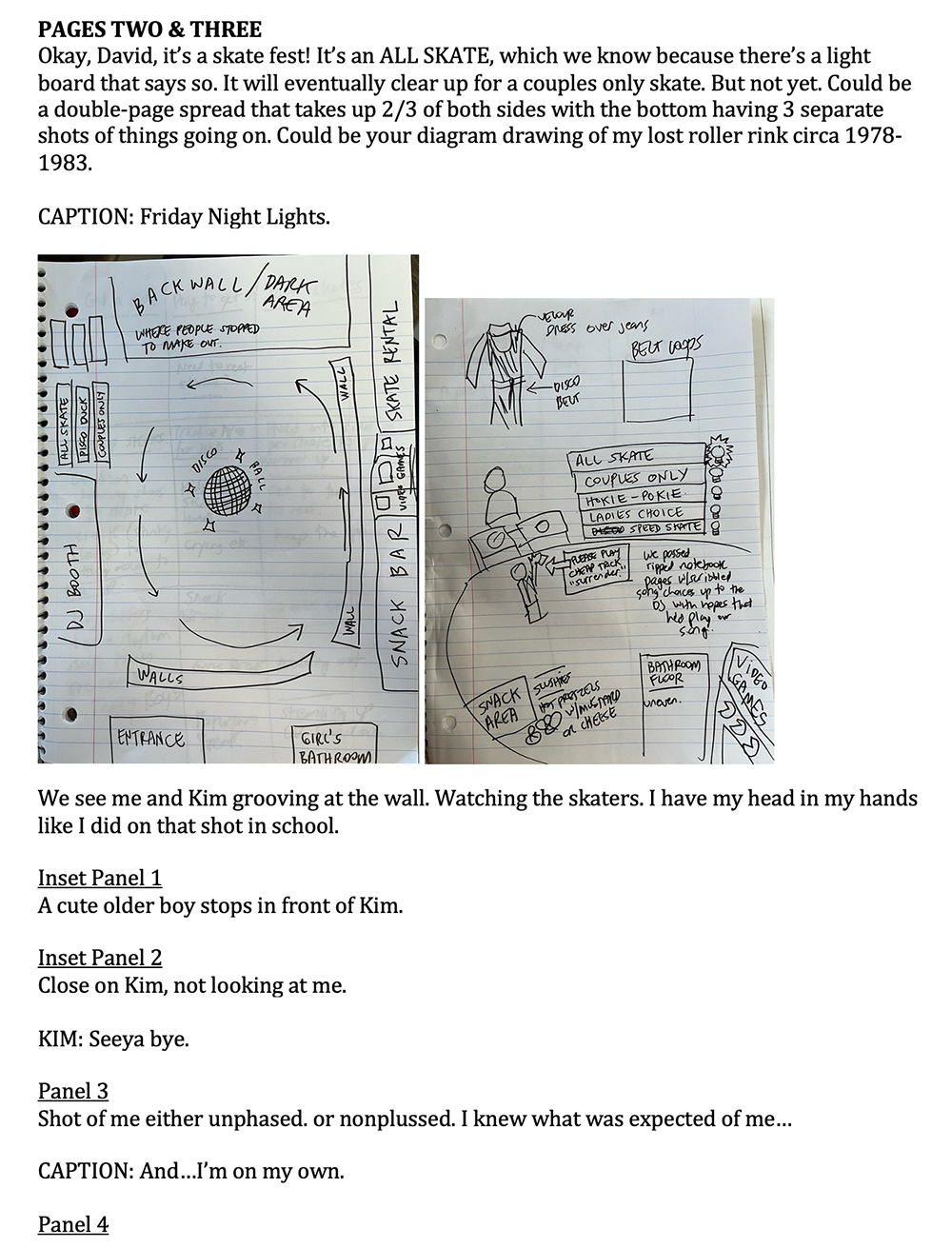
DIRECT FROM LAPHAM'S BRAIN:
"This was my first try at the double-page spread and shows some differences between comics and movies."
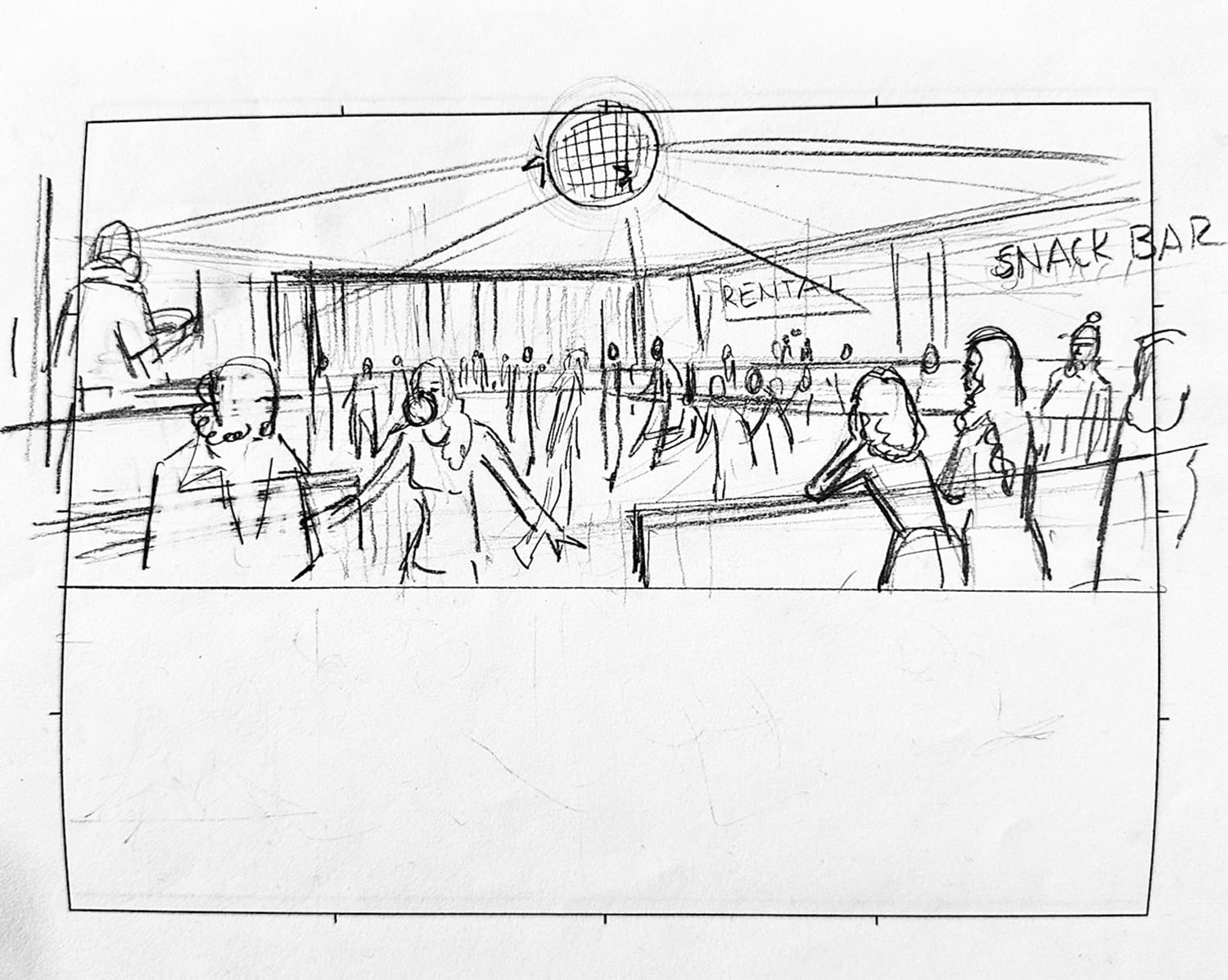
"I can totally see this shot (above) in my head. If this were a movie, I’d shoot it and pair it with a bunch of quick cuts and a vignette of the rink and the crazy skaters doing tricks, etc. You can do that in film where you can have ten shots in a matter of seconds.
"But in the comic we only have the real estate for one shot. So we need to set the mood and the environment in one illustration. It also has to be interesting to look at, and lastly, cool and fun to look at. So this first take didn’t work, and I came up with the shot we're using."
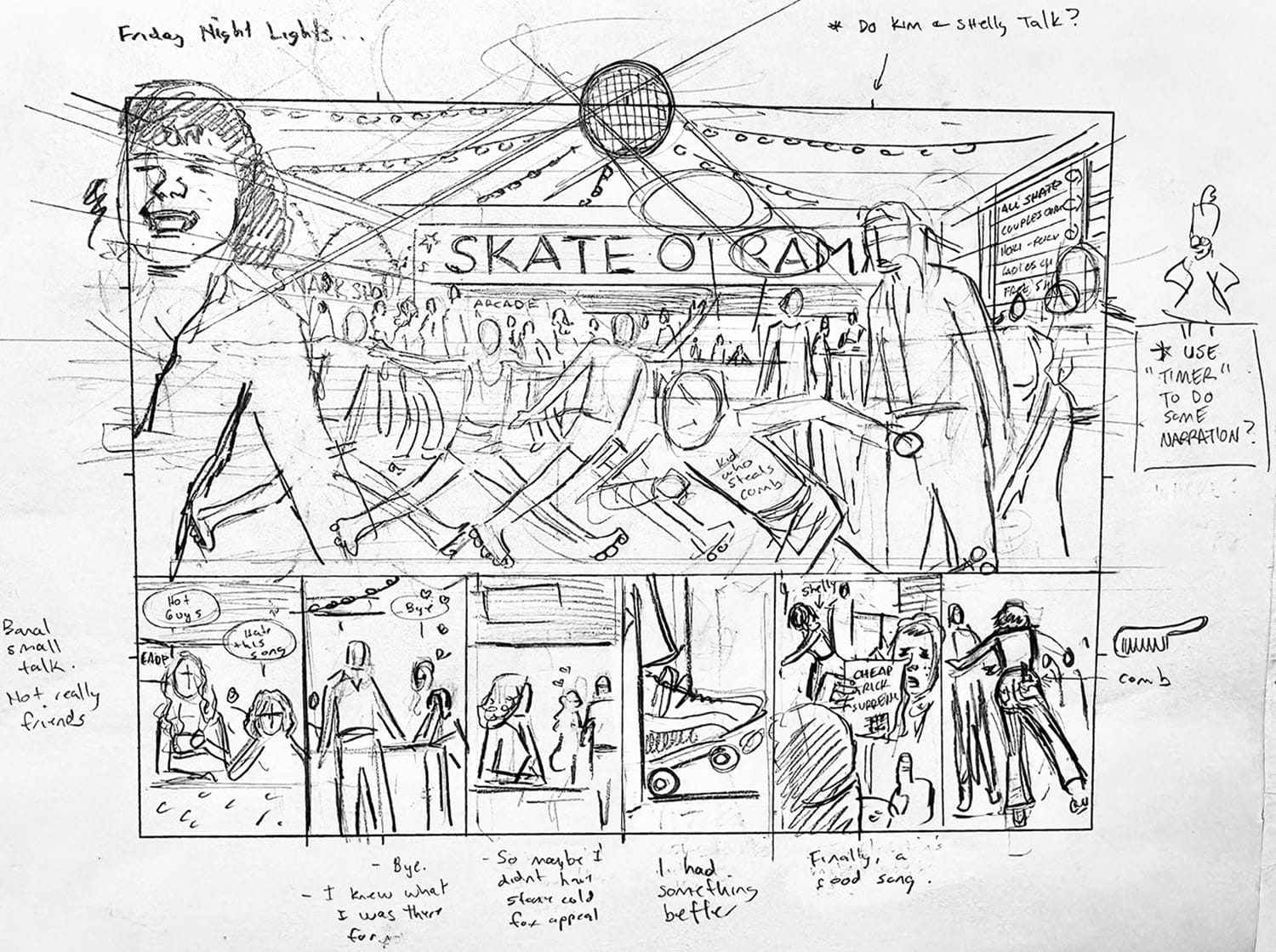
"I moved the angle out on the floor--right in the middle of the action where we get all the skaters. We establish everything and it’s fun. Conversely, that shot wouldn’t really work for live action. It’s an illustration where all the pieces are drawn in the exact right spot for a single instant. The motion requires something different. In comics we can capture it all in one panel. Actually we don’t capture it. We create it. "
David and I share a love for the analog approach to making comics. He thumbnails the script with a lead pencil (what?) on paper, and writes out dialogue snippets from the script directly on the page to make sure I understand his pacing. He also posits questions and points out tiny details that may or may not have been written into the script.
BOND EDITS
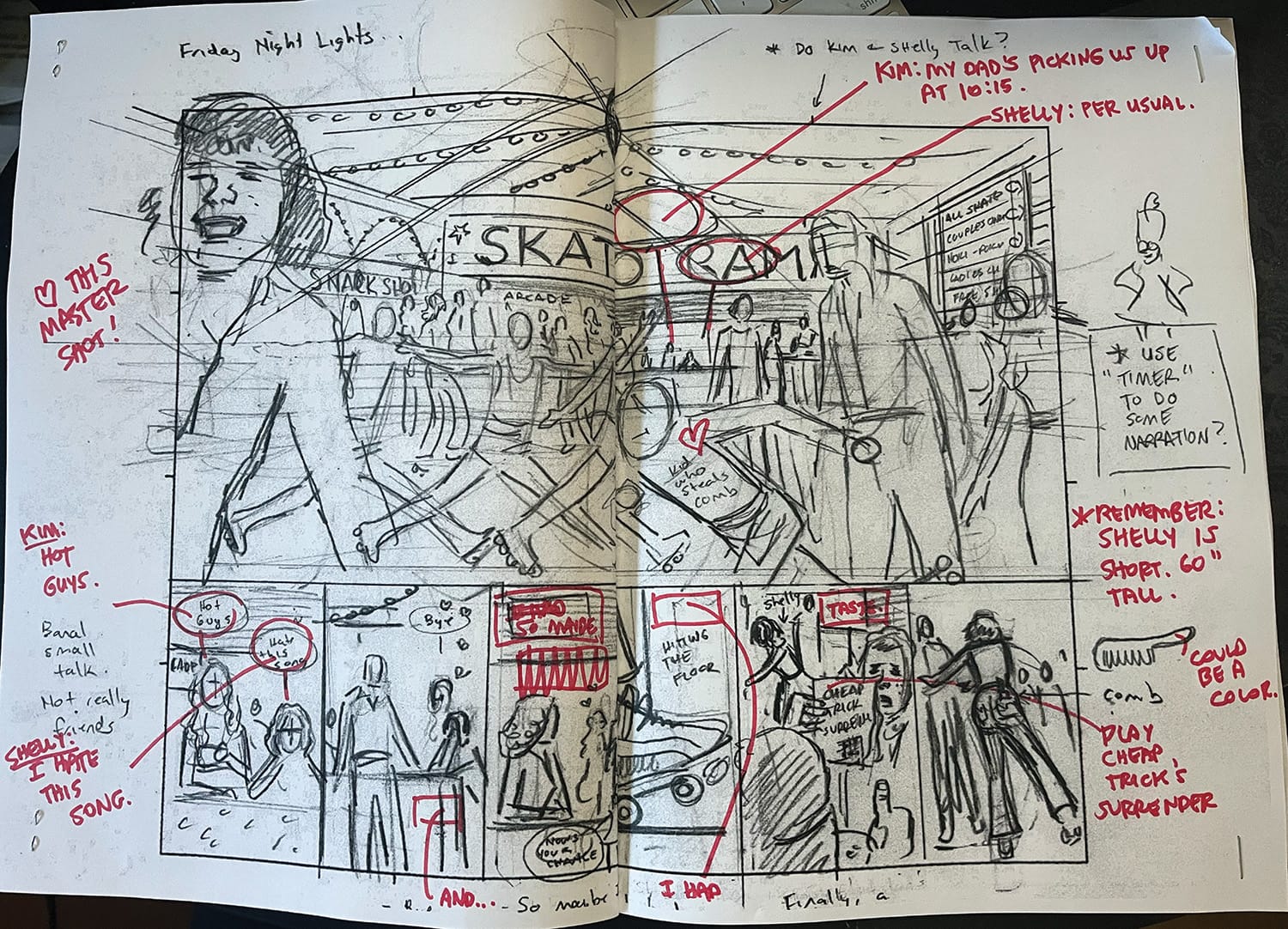
The edit notes are sparse but important: I notate things David completely nailed, and things I want him to remember or reconsider. The best editors look out for unintended repetition in words and pictures, a variation in camera angles and figure sizes, and cut what's not needed to become immersed in the story. Sometimes the editor and writer add things at this stage, because it's part of the evolving story. We should! We're collaborators, which is why David's dialogue suggestions in panels 1 and 2 were greatly appreciated. Working with someone who has your back and keeps everything flexible is how the best art comes to life.
LAPHAM'S PENCILS
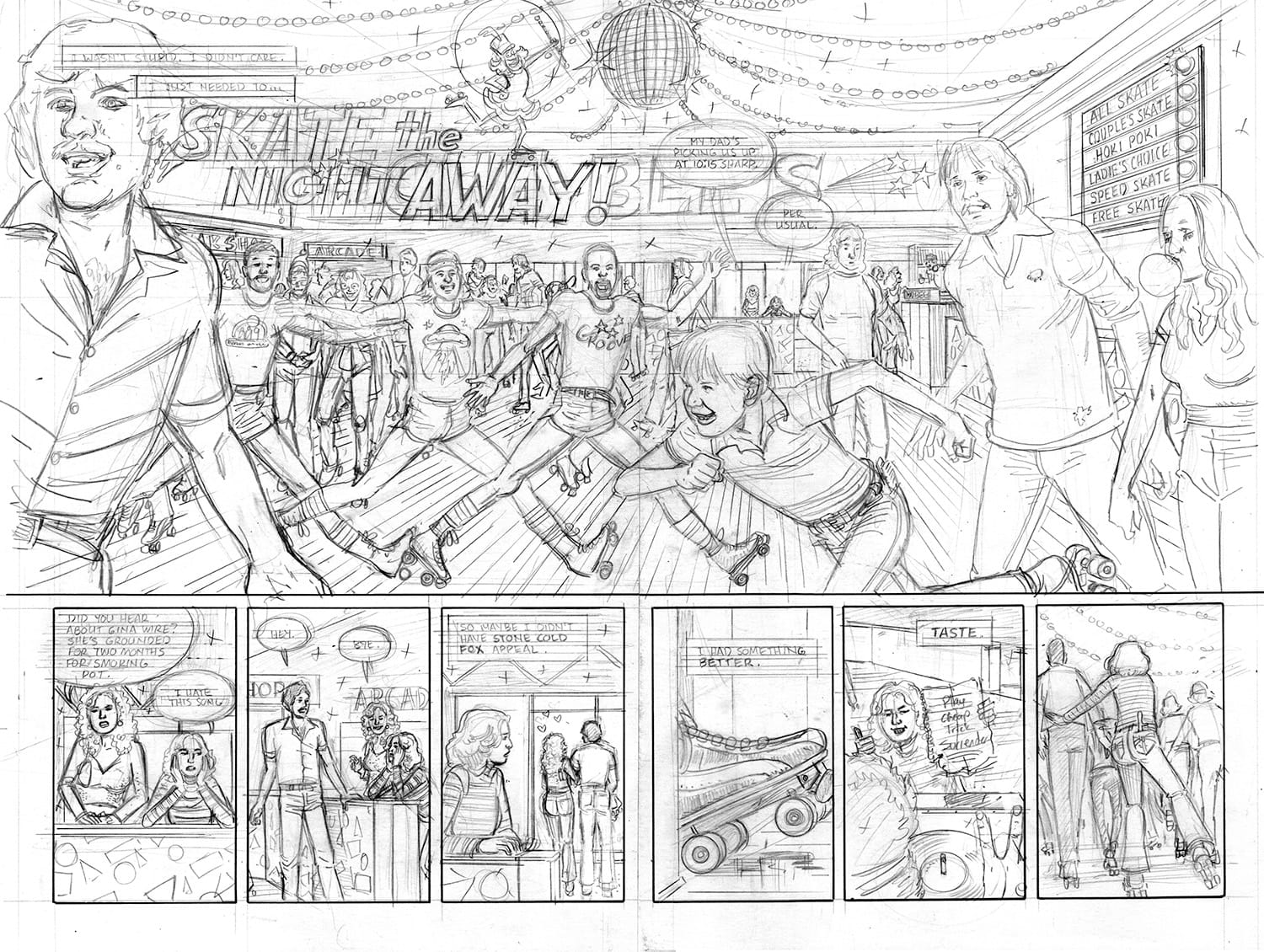
David's pencils are far more detailed and prettier than they need to be since he's inking and lettering himself. But he told me he just can't help it, so who am I to argue? He pencils in the lettering so he knows how much space to leave for the balloons and to be sure that the reading order is clear. Also, it's obvious David knows how to win friends at the roller rink. Those killer disco moves on four wheels can only be 2-D authentic if they're drawn by people who practice what they draw...
Damn straight! Soundtrack by The Cars, Cheap Trick, and Van Halen. More to come! Viva Comics!