Thursday Dispatch
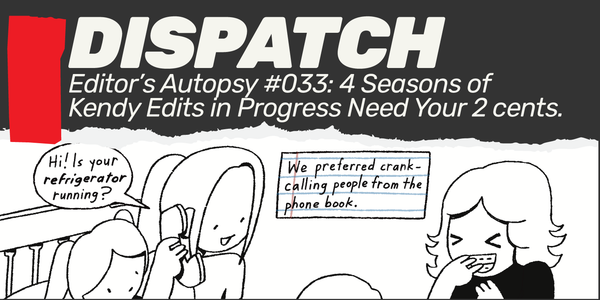
A few of you reached out to ask about specific sticky situations that an editor might face when it comes to problem-solving on sequential art. I'm preparing a presentation to share at our live Saturday AMA...
Back in March of 2024, I taught a 4-week class on weekends called F&G 102 and created a (Secret) Workbook just for the occasion. I wanted to share some of my favorite pages that involve REPEAT OFFENDERS and the 5 QUESTIONS I ask myself at each stage of editing comics.
Back by popular demand: It's another dispatch chock-full of deconstruction as we RIDE SHOTGUN on Where's Willingham?, part 2 of my Comico short comic from Fast Times in Comic Book Editing, wherein it's 1989, the editor is a kid, the writer is at large, and the game's afoot!
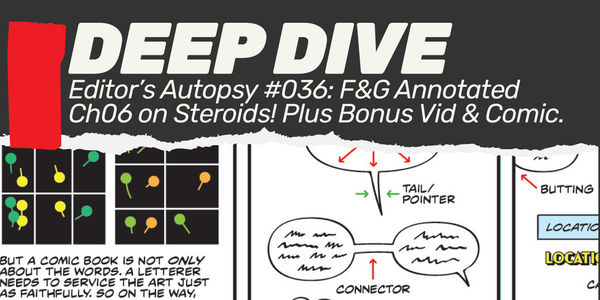
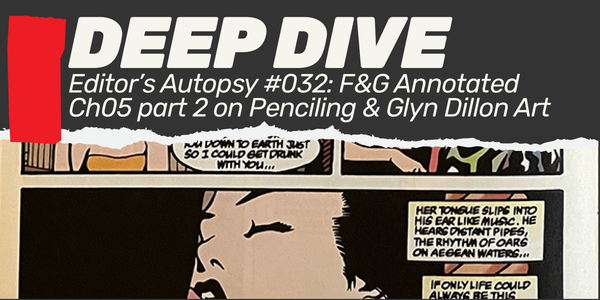
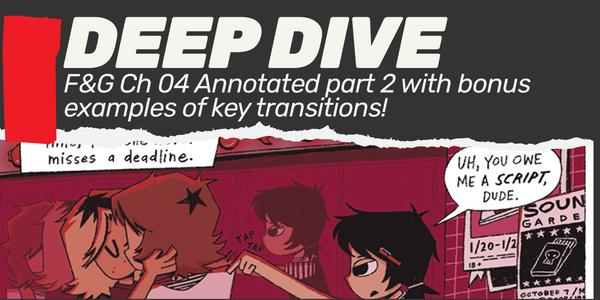
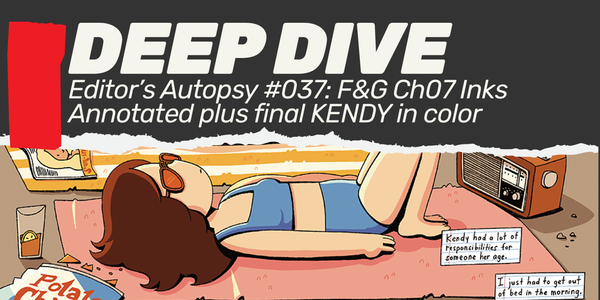
I’ve wanted to annotate F&G for eons—long before it was written and drawn. Mostly because the hardest part of making comics for me and probably anyone—writer, artist, newbie, vet—is knowing when to call a page a finished page.
Happy Final Friday of March! Here's The New British Invasion!
Greetings from the road as I make my way towards the Philadelphia airport. Spent a week on the east coast and managed to concoct a special “In Conversation” event with the legend that is Caroline Cash.
I need to fall on my sword for this next comic. In classic "Shelly" fashion, when I saw how easily Asimina connected with my comics-about-making-comics ideas, I sent her a few first drafts with blind abandon...
A 4 Chambers vid with Asimina & Annotating F&G starting with the cover image.
One of my favorite things to throw at artists and writers is the 4 CHAMBERS grid. I love to see how they make it their own. I could spend the next quarter-century writing one per day and still not exorcise my thoughts on the human condition.
Second Saturday & The Style Sheet of My Dreams
We seemed to have a lot in common (see a shared love for similar music and badass British films & directors), but who knows? Maybe she was sneaky and just did her research. I'm pretty easy to find on social media, and almost as easy to fool.
I've read my share of pitches (hundreds) in my time (decades) as a comic book editor for companies behemoth and miniscule. Here are 9 common omissions that force my hand to scrawl red ink onto your pitch.
WHERE WE'VE BEEN/WHERE WE'RE GOING
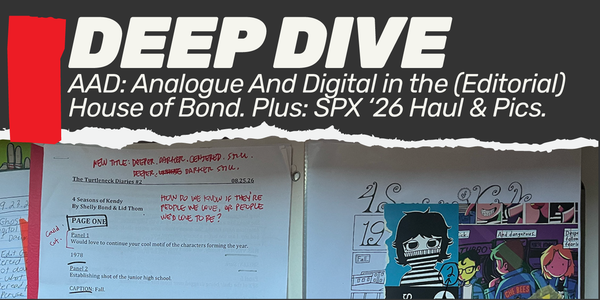
Hard to believe we're at the end stages of getting this FLIPBOOK comic to print. When you self-publish, you have to be resourceful since you're basically flying solo.
As you've noticed, there's editing at every stage of making comics. Sometimes the changes are subjective and may seem arbitrary. I do my best to only insist on revisions that will make a huge difference for the story.
Final vid, tonal shifts & essential pages to hang in your studio
Lid's bold art move that left me speechless in the middle of teenage wasteland, more edits, and the little book of PUKE.
I shared the Status Sheet on Tuesday, which is basically the classic 9-panel comic book grid on an 8.5 x 11 piece of paper. Without it, I don't know how I'd get anything done.
A day in the life of a comic book editor? Sure, it's changed a bit since I entered the field in 1988. But the method to my madness has remained pretty consistent. I guess I'm just a creature of habit...
Egregious Error Alert! Last Friday, as I was assembling the playlist for Skate The Night Away (see page 6 of F&GDD), I realized the error of my ways.